
PBOC’s emphasis on overnight repo rate sparks talk of policy framework shift.
Summary:
PBOC elevates focus on overnight repo rate
Monthly report reordered to highlight overnight benchmark
Potential shift away from 7-day reverse repo focus
Overnight rate already trading close to policy rate
Signals possible evolution in policy framework
The People's Bank of China has sharpened its focus on the overnight money market rate, fuelling speculation that Beijing may be preparing to recalibrate its operational policy framework.
In its latest monthly report, the PBOC reordered its discussion of short-term rates, placing greater emphasis on overnight repo movements rather than the traditional seven-day reverse repo rate that has long been treated as its primary policy reference. The shift follows earlier guidance from the central bank indicating it would seek to keep short-term funding costs more closely aligned with its stated policy stance.
Analysts see the move as more than cosmetic. By highlighting overnight conditions, the most immediate gauge of liquidity in the interbank market, the PBOC may be signalling a preference to anchor policy transmission at the shortest end of the curve. The overnight rate has already traded within 10 basis points of the official policy rate in more than half of 2025 trading sessions, suggesting de facto alignment is already occurring.
A formal pivot from the seven-day reverse repo to an overnight benchmark would represent a structural evolution in China’s monetary operations. The seven-day rate has historically provided the clearest signal of policy intent, particularly during liquidity injections or tightening phases. However, a tighter corridor around the overnight rate could enhance control over short-term volatility and improve transmission to broader funding markets.
Such a shift would also bring China’s framework closer to global central bank practice, where overnight benchmarks typically anchor policy implementation.
While the PBOC has not explicitly declared a change in its primary target, the report’s reordering and operational signals suggest the groundwork for a more flexible, overnight-focused system may already be underway.
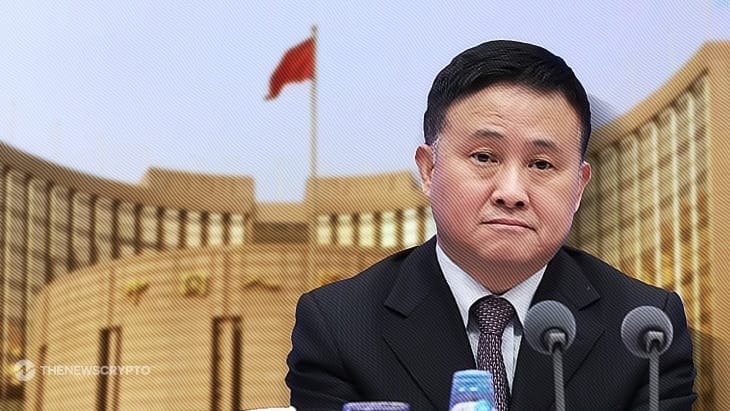
People's Bank of China Governor Pan Gongsheng