Summary:
PBOC rolls CNY 1.1tn via three-month outright reverse repos
Structure uses fixed quantity, multi-price bidding
Signals liquidity stability, not necessarily new net easing
Supports early-year bond issuance and credit supply narrative
Aligns with broader 2026 stance: keep liquidity ample
---
The People's Bank of China (PBOC) will conduct a 1.1-trillion-yuan (about 157 billion U.S. dollars) outright reverse repo operation on Thursday. As 1.1 trillion yuan of three-month outright reverse repos are set to mature in January, the move represents a rollover of the same amount.
Xinhua (state media in China) with the report.
---
The PBOC’s decision to run a CNY 1.1tn three-month “outright reverse repo” operation is best read as a liquidity-management rollover, not a fresh “big easing” signal, but it still matters for rates, bonds and the policy narrative at the start of the year.
Mechanically, the central bank said it will conduct the operation via fixed-quantity, interest-rate bidding with multiple winning price levels, and a three-month tenor. The key detail is that CNY 1.1tn of three-month outright reverse repos mature in January, meaning this operation rolls the same amount, helping the PBOC keep funding conditions stable as seasonal cash demand and government financing needs rise.
So why do it? First, early-year conditions in China often come with heavier government bond issuance and shifting liquidity needs across banks and non-banks. A clean rollover helps avoid a funding squeeze, supports orderly bond-market functioning, and helps institutions maintain credit supply, the explanation offered by a domestic analyst cited in the report. Second, the form of the tool is meaningful: the PBOC has been broadening its toolkit and leaning more on market-based auction mechanisms (multiple-price bidding) to guide liquidity, rather than relying on one “headline” facility. Reuters has described similar multi-price, fixed-quantity auctions as part of an effort to let market pricing play a larger role while still steering system liquidity.
Implications:
Rates/bonds: A rollover should be neutral-to-supportive for near-term money-market stability and can help keep government bond issuance running smoothly.
Policy signalling: It fits with the broader “supportive / moderately loose” stance officials have been messaging into 2026, including stated intent to use tools (RRR and rates) to maintain ample liquidity.
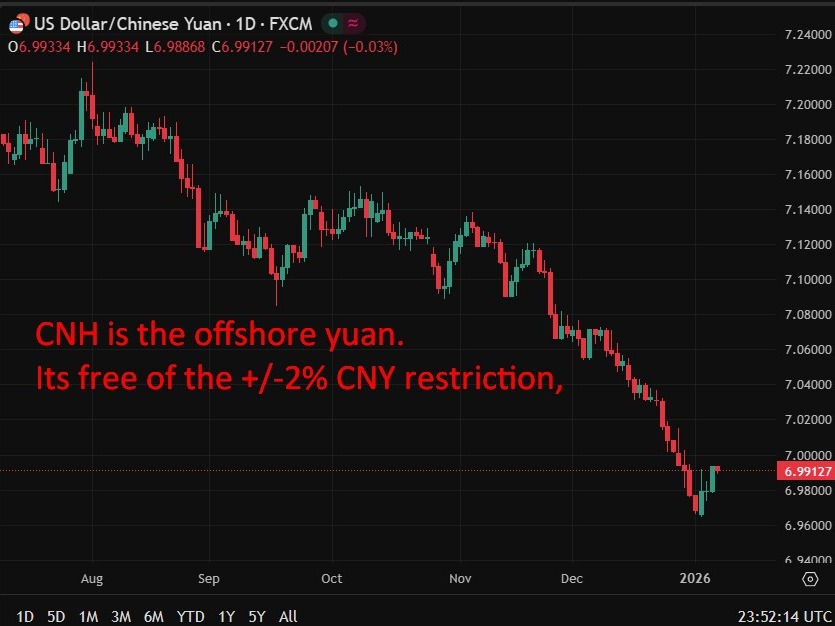
FX: Because this is a rollover rather than a net injection, it’s less likely to be read as an aggressive easing shock to the yuan on its own, though it reinforces the bias toward accommodation if growth/inflation remain soft.
Bottom line: the PBOC is aiming to remove liquidity cliffs and smooth funding through Q1, keeping policy supportive without necessarily “flooding” the system.