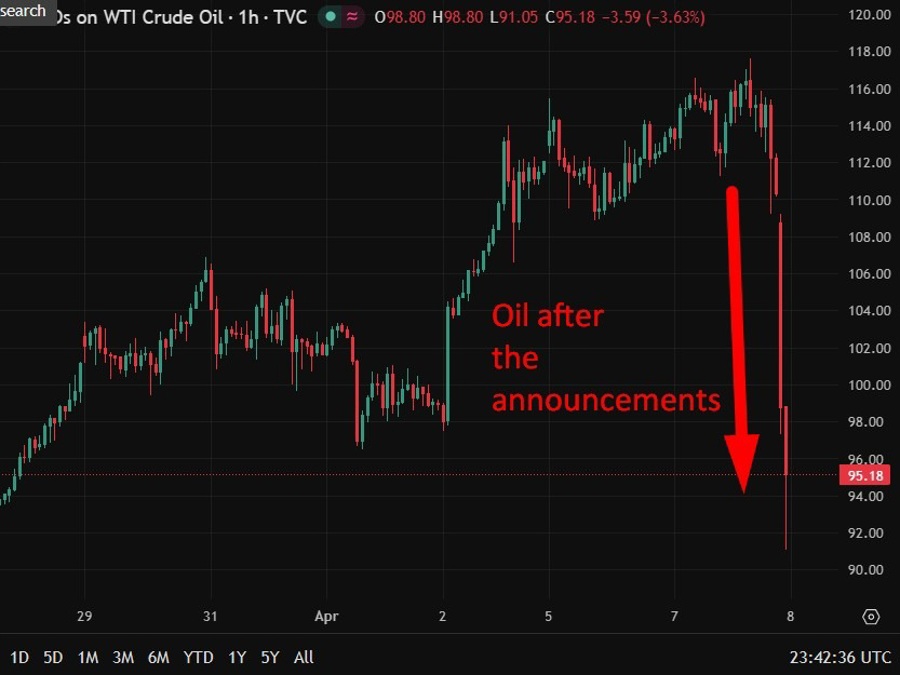
The big news is, of course:
- TRUMP HAS AGREED TO SUSPEND IRAN BOMBING FOR TWO WEEKS
- Iran confirms US talks, says ceasefire hinges on finalising 10-point deal
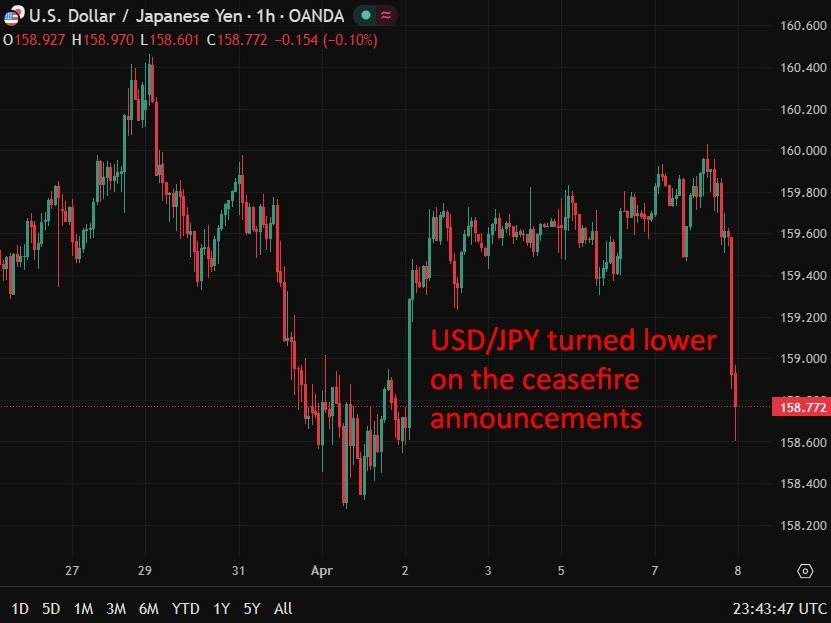
This has taken the bid out of the USD, yen a beneficiary with USD/JPY back under 159.00.
Meanwhile, on the data front from Japan ...
Summary:
- Japan real wages +1.9% y/y, strongest in five years
- Second straight month of real wage growth
- Nominal wages +3.3% y/y, fastest in seven months
- Base pay growth strongest in ~34 years
- Wage growth outpaces inflation, boosting purchasing power
- Data supports BoJ case for further rate hikes
- Spring wage deals suggest more upside ahead
Japan’s wage data for February delivered a significant upside surprise, with real wages rising at their fastest pace in five years, reinforcing the case for further policy tightening from the Bank of Japan.
Government figures showed inflation-adjusted real wages climbed 1.9% year-on-year, accelerating sharply from a revised 0.7% gain in January and marking a second consecutive month of growth. The result represents the strongest increase since 2021 and signals a meaningful improvement in household purchasing power after a prolonged period of real income stagnation.
Nominal wage growth also remained robust. Total cash earnings rose 3.3% year-on-year, the fastest pace in seven months, while base salaries—considered a key indicator of sustainable wage momentum—also increased 3.3%, the largest rise in nearly 34 years. For full-time workers, base pay climbed an even stronger 3.7%, underscoring broad-based gains across the labour market. Overtime pay, often viewed as a proxy for corporate activity, matched this pace with a 3.3% increase, while bonus-related special payments rebounded strongly.
Importantly, wage growth outpaced inflation, with the consumer price measure used to calculate real wages rising just 1.4% in February, the slowest pace in four years. This reflects a combination of government subsidies and moderating price pressures, even as external risks—particularly energy prices linked to the Iran conflict—continue to cloud the outlook.
The data strengthens the argument that Japan is moving closer to achieving a durable wage-price cycle, a key prerequisite for further rate hikes. Notably, the February figures precede the outcome of this year’s spring wage negotiations, which have already delivered pay increases above 5% for a third consecutive year, suggesting further upside to wage growth in coming months.
For policymakers, the combination of rising real incomes and sustained nominal wage gains adds to confidence that inflation can be supported domestically, rather than relying on external cost pressures. Markets have increasingly priced in a rate hike at the Bank of Japan’s upcoming April meeting, and the latest data is likely to reinforce those expectations.
However, uncertainty remains. While wage dynamics are improving, the broader economic backdrop—including global growth risks and energy-driven inflation volatility—will continue to influence the timing and pace of policy normalisation. Still, the direction of travel is becoming clearer, with Japan’s long-awaited wage recovery now firmly underway.
---
Sneaky oil update: