This reinforces a higher-for-longer bias in the near term. The Fed is signalling tolerance for energy-driven inflation spikes but remains wary of second-round effects. For markets, that keeps rate cuts uncertain and timing pushed out, particularly if oil remains elevated. USD support should persist on policy divergence, while front-end yields stay sensitive to inflation expectations rather than growth fears alone.
Summary:
- Fed’s Williams says policy is “well positioned” despite unusually high uncertainty
- Middle East war and tariffs seen pushing headline inflation higher near term
- Energy shock flagged as key driver of inflation upside and growth downside
- Inflation expected at ~2.75% this year, returning to 2% by 2027
- Growth seen resilient (~2.5%), labour market sending mixed signals
- Fed not signalling urgency to adjust rates; wait-and-see stance reinforced
Federal Reserve Bank of New York President John Williams said monetary policy remains appropriately positioned to navigate what he described as an “unusual set of circumstances,” as geopolitical tensions and trade policy shifts complicate the inflation outlook. Echoing Powell from earlier on Monday.
Speaking in prepared remarks, Williams highlighted that the ongoing Middle East conflict and tariff measures are likely to push headline inflation higher in the near term, primarily through elevated energy prices and rising input costs. He warned that the war could act as a classic supply shock, simultaneously lifting inflation while weighing on economic growth, a dynamic already beginning to emerge in incoming data.
Despite these pressures, Williams emphasised that longer-term inflation expectations remain anchored around the Federal Reserve’s 2% target, suggesting policymakers may be willing to look through temporary energy-driven price increases unless they spill over into broader underlying inflation.
The comments reinforce a cautious policy stance from the Fed, with officials reluctant to commit to near-term rate adjustments amid heightened uncertainty. Williams did not indicate any urgency to shift interest rates, arguing that the current policy setting strikes a balance between supporting employment and containing inflation risks.
On the macro outlook, Williams maintained a relatively constructive view. He expects US GDP growth to come in around 2.5% this year, supported by underlying economic resilience, while the unemployment rate is projected to edge lower over time. However, he acknowledged that labour market signals remain mixed, with weaker hiring dynamics contributing to more pessimistic sentiment.
Inflation is expected to rise to around 2.75% this year before gradually easing back toward the Fed’s 2% target by 2027, a somewhat more optimistic trajectory than that of several of his colleagues.
The broader backdrop underscores the policy dilemma facing the Fed. Elevated energy prices linked to disruptions in the Strait of Hormuz and wider geopolitical instability are feeding into inflation, while at the same time posing downside risks to growth. This leaves policymakers balancing competing forces, with markets still debating whether the next move is a rate cut or a prolonged hold.
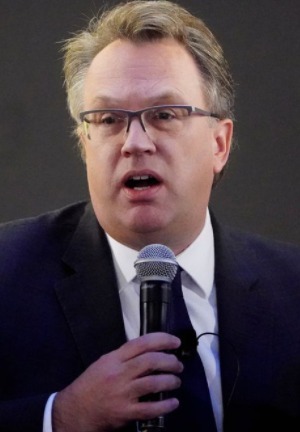
As head of the New York Federal Reserve Williams is a permanent voter on the Federal Open Market Committee (FOMC). Indeed, he is vice-chair of the committee (Powell is Chair of the Committee and of the Federal Reserve System as a whole). And loves a good karoke night!