Summary:
Centeno highlights Europe’s structural uncertainty
ECB seen as stabilising institutional anchor
Risks shifting outside traditional banking system
Emphasis on discipline, independence and consensus
Interview avoids near-term policy guidance
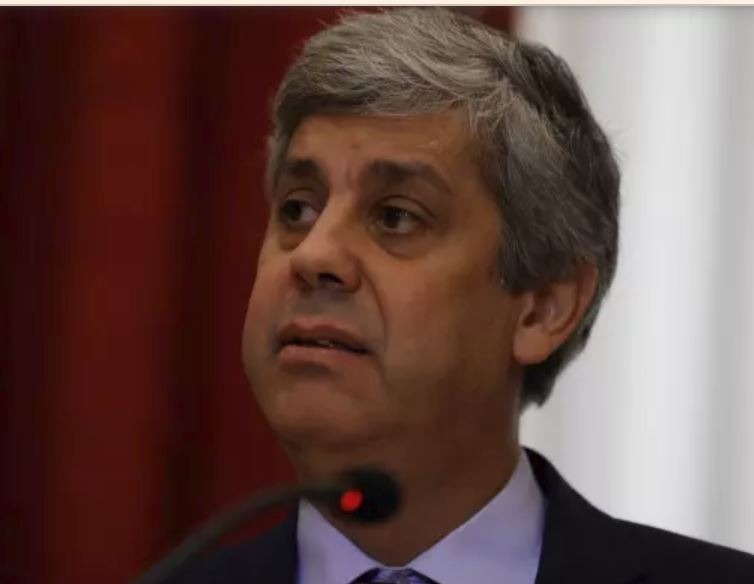
Mario Centeno, governor of Banco de Portugal (the country's central bank) said Europe has entered a period of “structural uncertainty” marked by trade tensions, elevated sovereign debt and rapid economic change, arguing that the European Central Bank must act as a stabilising institutional anchor as these pressures intensify.
In an interview (may be gated) following his nomination to succeed ECB Vice President Luis de Guindos, whose term ends in May 2026, Centeno avoided commenting on current monetary policy but outlined a framework that carries implications for markets. He pointed to abrupt shifts in labour markets, competing fiscal demands and geopolitical fragmentation as sources of uncertainty that require discipline, independence and decisiveness from Europe’s institutions.
Centeno said the ECB leadership must combine political judgement with consensus-building, particularly as risks in the financial system evolve. He highlighted growing valuation pressures, rising asset-class concentration and the migration of risk outside the traditional banking sector, dynamics that investors increasingly see as sources of latent volatility rather than immediate stress.
While the selection process will be decided by the European Council following consultations with the European Parliament and the ECB, Centeno said broad consensus would benefit Europe. He noted that feedback from euro-area counterparts has been encouraging, citing his experience as a former finance minister, central bank governor and Eurogroup president who helped steer Europe through the euro-area crisis, the pandemic and the Ukraine shock.
Centeno also addressed questions about regional balance within the ECB’s Executive Board, arguing that while representation should not be framed as an issue of fairness, a balanced view of Europe is important for institutional credibility. Portugal, he noted, is currently absent from the executive leadership of Europe’s major financial institutions.
For markets, Centeno’s remarks reinforce a narrative of institutional continuity rather than policy pivot, emphasising resilience, risk anticipation and coordination at a time when macro uncertainty, rather than inflation alone, is shaping the European outlook.