ECB officials are leaning toward holding rates in April, opting to wait for clearer evidence on the Iran war’s impact, even as markets continue to price further rate hikes later this year, Bloomberg reports.
Earlier:
Summary:
- ECB policymakers are leaning toward holding rates at the April meeting as they assess the Iran war’s economic impact.
- Officials say tighter financial conditions are helping anchor inflation expectations for now.
- Incoming data is unlikely to provide clear guidance on growth or inflation risks before the meeting.
- Policymakers are wary of past policy mistakes, including delayed tightening in 2022 and premature hikes in 2011.
- Inflation has risen to 2.5% but remains close to target, while growth risks are building.
- Markets still price in two rate hikes this year despite cautious ECB rhetoric
European Central Bank officials are leaning toward keeping interest rates unchanged at their April meeting, opting to wait for clearer evidence on how the Iran war is affecting inflation and growth, according to people familiar with the discussions, as reported by Bloomberg.
Policymakers are said to be encouraged by the fact that tighter financial conditions are already helping to anchor inflation expectations, reducing the urgency for immediate action. With inflation still broadly near target and uncertainty elevated, officials see little benefit in rushing into a policy move that may ultimately prove unnecessary.
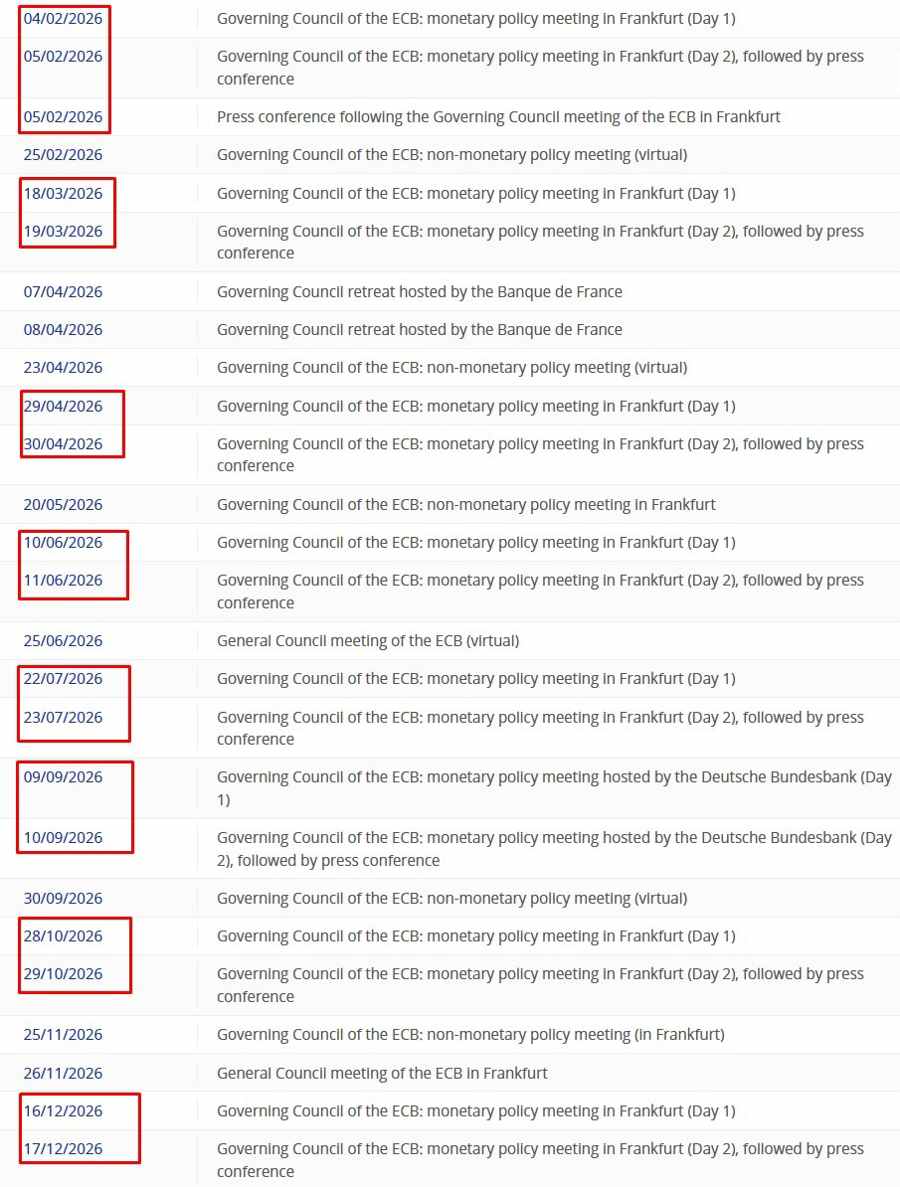
The upcoming April 29–30 meeting is unlikely to be informed by decisive data. Officials believe incoming indicators will not yet fully capture the economic fallout from nearly two months of conflict in the Middle East, including its effects on supply chains, energy prices and demand. With negotiations ongoing, there is also a possibility that the economic damage could remain contained.
ECB officials are also mindful of past policy missteps. They have referenced the delayed response to the inflation surge following Russia’s invasion of Ukraine in 2022, as well as the 2011 rate hikes during the eurozone debt crisis that were later reversed. These episodes are reinforcing a more cautious and data-dependent approach.
While energy costs linked to the conflict have pushed eurozone inflation up to around 2.5%, the persistence of this pressure remains uncertain and depends heavily on how long the war lasts. At the same time, the growth outlook has weakened, with governments and businesses bracing for softer demand.
President Christine Lagarde has emphasised that the ECB must remain flexible and avoid committing to a specific policy path. Other officials, including Isabel Schnabel and Francois Villeroy de Galhau, have also signalled that a rate move in April may be premature.
Despite this cautious tone, markets continue to price in further tightening later this year.
Reinforces near-term pause expectations but keeps medium-term tightening in play. Front-end euro rates may stay anchored, while markets remain sensitive to energy prices and incoming inflation data.