China signalled continued policy support, with the PBOC maintaining a loose stance and officials accelerating fiscal spending and investment in tech and energy to support growth amid global risks.
Summary:
- PBOC signals “appropriately loose” policy, prioritising consumption support
- China warns on global imbalances, protectionism, and policy spillovers
- NDRC rolls out large-scale fiscal and industrial support measures
- Focus on AI, digital economy, and private investment in high-growth sectors
- Energy security push intensifies amid global shock risks
China’s central bank and top economic planners struck a coordinated policy tone, signalling continued monetary support, stepped-up fiscal deployment, and structural reforms aimed at stabilising growth and boosting domestic demand.
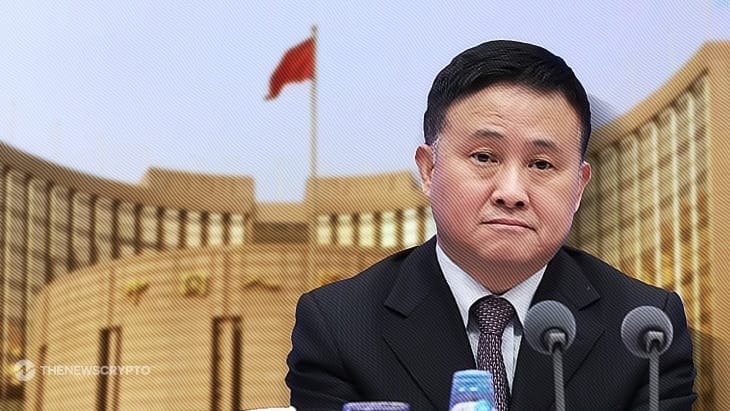
Speaking at the G20 finance meetings, People’s Bank of China Governor Pan Gongsheng reiterated confidence in China’s long-term economic trajectory, while signalling that monetary policy will remain “appropriately loose.” The central bank will prioritise measures to support consumption, reflecting ongoing efforts to rebalance growth away from investment and exports.
Pan also used the platform to deliver a broader message on the global economy, warning that rising protectionism, trade fragmentation, and structural weaknesses in the international monetary system are worsening global imbalances. He called for stronger G20 coordination to mitigate spillover risks from unilateral policy actions, underscoring China’s push for a more stable external environment.
On the domestic front, China’s state planner, the National Development and Reform Commission (NDRC), outlined an expansive policy agenda aimed at reinforcing growth momentum. Authorities will accelerate deployment of 800 billion yuan in policy financial tools, alongside 755 billion yuan in central budget investment and around 1 trillion yuan in ultra-long special bonds, with much of the allocation expected by mid-year.
Policy support is increasingly targeted toward high-growth sectors, with officials highlighting plans to boost private investment in areas such as the digital economy, artificial intelligence, and commercial space industries. This reflects a broader shift toward upgrading China’s industrial base and supporting emerging technologies.
Energy security remains a parallel priority. The NDRC signalled plans to diversify energy imports, expand strategic reserves, and accelerate the build-out of non-fossil energy capacity, which is expected to double over the coming decade. Officials emphasised that domestic energy markets remain stable due to government intervention, even as global shocks persist.
At the same time, structural reforms are set to deepen, including efforts to unify the national market, improve factor allocation, and curb excessive competition across industries.
Overall, the policy mix points to a coordinated approach combining monetary easing, fiscal expansion, and industrial strategy, as Beijing seeks to underpin growth while navigating a more fragmented and uncertain global backdrop.
Supports China growth expectations and risk sentiment, with positive spillovers for commodities and Asia equities. Policy focus on tech and energy transition may underpin industrial metals and clean energy sectors.