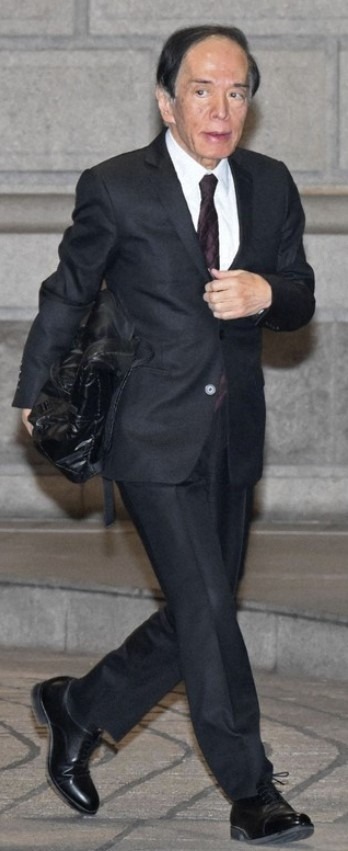
BOJ Governor Ueda says inflation is gradually moving toward target ahead of the March 19 policy meeting.
Bank of Japan Governor Kazuo Ueda told parliament that underlying inflation is gradually accelerating toward the BOJ’s 2% target.
He reiterated the central bank will adjust policy as needed to achieve stable and durable inflation at the target level.
Ueda said underlying inflation is expected to converge toward the 2% target between the second half of fiscal 2026 and fiscal 2027.
The remarks come just days before the BOJ’s policy decision on Wednesday, March 19, 2026, where the bank is widely expected to hold its policy rate at 0.75%.
Markets are closely watching for signals on the timing of the next rate hike and possible adjustments to bond purchases.
The yen remains under pressure, leaving investors sensitive to policy signals that could affect USD/JPY dynamics.
Bank of Japan Governor Kazuo Ueda said underlying inflation in Japan is gradually strengthening toward the central bank’s 2% target, reinforcing the view that price pressures are becoming more sustainable even as policymakers move cautiously on further monetary tightening.
Speaking in Japan’s parliament on Monday, Ueda indicated that underlying inflation is continuing to gain momentum and is expected to converge toward the BOJ’s price stability target between the second half of fiscal 2026 and fiscal 2027.
The remarks provide fresh context ahead of the Bank of Japan’s upcoming policy meeting scheduled for Wednesday/Thursday, March 18 & 19, 2026, where the central bank is widely expected to keep its policy rate unchanged at 0.75%. That level was set following the rate increase delivered in December 2025, which lifted borrowing costs to their highest point in roughly three decades.
While the BOJ has been gradually normalising policy after years of ultra-loose settings, officials have emphasised the need to confirm that inflation can remain sustainably around the 2% target before moving further with tightening.
Ueda’s latest comments suggest the central bank continues to see progress toward that goal, although the timeline for achieving stable inflation remains relatively extended.
Investors are paying close attention to the BOJ’s outlook as Japan navigates a complex economic environment that includes rising global energy prices, a weakening yen and still uneven wage growth.
At the upcoming meeting, markets will focus not only on the rate decision itself but also on the central bank’s updated economic projections and any potential signals regarding future policy moves.
Some economists have previously suggested the BOJ could consider another rate increase as early as April 2026 if inflation momentum continues to build.
In addition, attention will remain on the BOJ’s approach to government bond purchases. Japanese government bond yields have risen in recent months, prompting speculation that policymakers could adjust the pace of their bond purchase tapering to maintain stability in long-term yields.
Currency markets are also closely watching developments in Japan’s monetary policy outlook. The yen has faced persistent downward pressure, leaving traders alert to the possibility of intervention by Japanese authorities if USD/JPY were to approach the 160 level.
Against this backdrop, Ueda’s comments reinforce the message that the BOJ sees inflation gradually moving in the right direction but remains cautious about tightening policy too quickly.