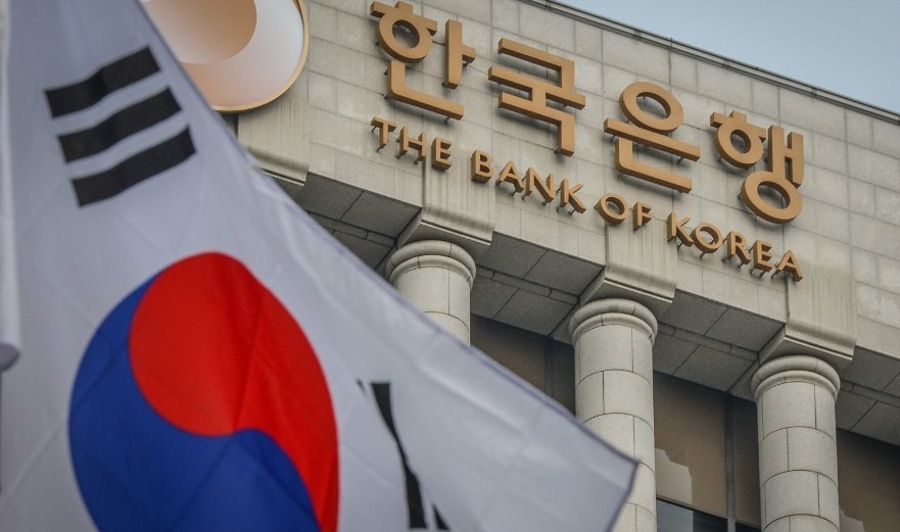
Bank of Korea set to hold on April 10 as oil shock clouds inflation and growth outlook.
Summary:
- Bank of Korea expected to hold rates at 2.50% on April 10
- Reuters poll shows unanimous no-change expectation
- Rates seen on hold through 2026 amid uncertainty
- Oil prices surge over 50%, lifting inflation risks
- Korea highly exposed to energy imports from Gulf
- Inflation trending above target, forecasts revised higher
- Growth outlook clouded by energy shock and weaker won
The Bank of Korea is widely expected to keep its base rate unchanged at 2.50% at its April 10 policy meeting, as policymakers grapple with heightened uncertainty stemming from the Iran war and its impact on inflation and growth.
A Reuters poll of 31 economists showed unanimous expectations for no change at the upcoming decision, with the policy rate also seen remaining on hold through the rest of 2026. The outlook reflects a cautious stance from the central bank as it assesses the economic fallout from surging energy prices and broader geopolitical instability.
Since the escalation of the conflict, oil prices have risen sharply—by more than 50%—posing a significant challenge for South Korea, which is heavily reliant on energy imports, with roughly 70% sourced from the Gulf region. This leaves the economy particularly exposed to sustained energy price shocks, with implications for both inflation and domestic demand.
Recent inflation data has already shown some upward pressure. Consumer prices rose 2.2% year-on-year in March, slightly above the Bank of Korea’s 2% target, while forecasts now point to inflation averaging around 2.4% in 2026—higher than earlier projections. The near-term outlook suggests inflation could accelerate further, with expectations for 2.6% this quarter.
At the same time, growth risks are building. The central bank had previously upgraded its 2026 growth forecast to 2.0%, but that was based on significantly lower oil price assumptions. With energy costs now elevated and the Korean won weakening—down around 4% since the conflict began—there is increasing concern that imported inflation could rise while economic activity softens.
The Bank of Korea is therefore expected to emphasise a balanced and flexible policy approach. Policymakers are likely to signal that they are monitoring both downside risks to growth and upside risks to inflation, rather than committing to a clear tightening or easing path. Updated forecasts are not expected at this meeting, but forward guidance may provide clues on how the Bank is reassessing the outlook.
For now, the consensus view is that the central bank will remain on hold, waiting for greater clarity on how persistent the energy-driven inflation shock proves to be. However, the risks appear skewed, with a prolonged conflict potentially forcing policymakers to confront a more difficult trade-off between stabilising prices and supporting growth.