
The US Securities and Exchange Commission (SEC) is signaling a new era for digital assets. Under the leadership of Chairman Paul Atkins, the agency has unveiled "Project Crypto"—an initiative that investment firm Bernstein called the "most transformative crypto vision ever from a sitting SEC head."
The plan represents a fundamental shift in regulatory posture, moving away from an enforcement-first approach to one that aims to provide clear rules for the next generation of on-chain finance. With a focus on fostering innovation in tokenization and crypto "super-apps," Project Crypto is designed to bring the digital asset industry back to American shores.
As Binance CEO Richard Teng commented in an X post, “The U.S. is finally moving beyond trying to retrofit 80-year-old securities laws to blockchain technology. The combined force of Project Crypto, the GENIUS Act, and the market structure bills being debated in Congress, introduces a modular, layered approach to digital-asset oversight. That means clear token classification standards, sandboxed pathways for compliant innovation, and licensing structures that reflect how crypto markets actually operate.”
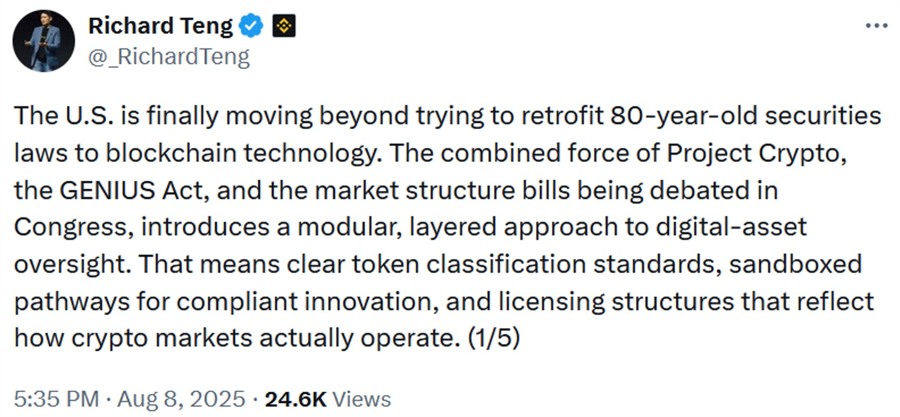
“Project Crypto’s proposed safe harbor principles can prove a game changer. It allows token projects to develop with regulatory breathing room (subject to disclosures and compliance benchmarks, of course) rather than fearing immediate enforcement. This shift will materially reduce the legal risk that has stifled U.S. developers and driven talent offshore,” Teng continued.
For years, critics argued that the lack of regulatory clarity was the single biggest reason US talent and capital were flowing abroad. Now, the SEC is explicitly positioning itself to reverse that exodus and reclaim leadership in digital finance.
Tokenized Stocks and Crypto Super-Apps
At its core, Project Crypto is a commission-wide effort to modernize outdated securities laws for the digital age. This isn't just a minor policy tweak; it's a sharp break from the "regulation by enforcement" strategy of the last administration. In a clear reversal, Atkins declared that "most crypto assets are not securities," getting straight to the heart of the industry's long-standing battle with the vague Howey Test.
This new vision is supported by a series of pro-crypto regulatory and legislative moves. The recently signedGENIUS Act establishes a clear federal framework for stablecoins, a foundational element for on-chain commerce. This was followed by an executive order to create aStrategic Bitcoin Reserve, treating the asset as a national store of value.
The SEC itself has also been active. It recently issued guidance clarifying that rewards from protocol staking do not constitute securities transactions, a move that provides much-needed clarity for network participants. The commission also approved in-kind creations and redemptions for crypto ETFs, a key mechanism for improving the efficiency of these products.
A central pillar of Project Crypto is the push to enable financialsuper-apps—platforms that can offer a wide range of services under a single license. This would effectively dismantle the current fragmented system, where platforms often require dozens of state-level licenses to offer a full suite of products. The ultimate goal, as outlined by Atkins, is to "reshore the crypto businesses that fled our country" by providing a clear and accommodating regulatory environment.
Bernstein's read-through is unambiguous: Project Crypto lays the groundwork for large-scale tokenization of traditional securities—starting with equities and bonds—and aims to build the world's largest tokenized market on US soil. Wall Street and major tech firms are already positioned to participate; Atkins has directed staff to use interpretative and exemptive tools to let tokenized equities, money market funds, and other instruments trade on SEC-regulated venues.
Fuel to an Already Surging Crypto Market?
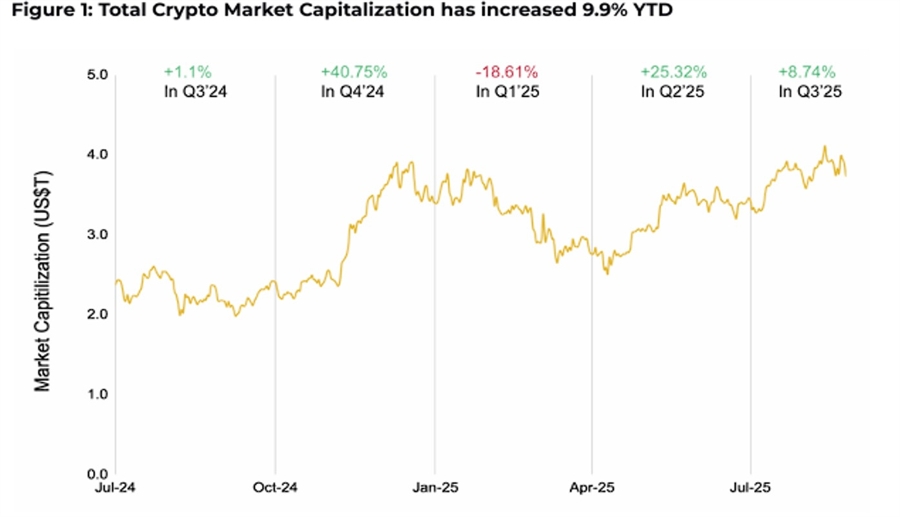
This regulatory thaw is happening as the market itself shows signs of deep institutional conviction. The crypto market cap has added over $600 billion in value this year, a 9.9% gain.
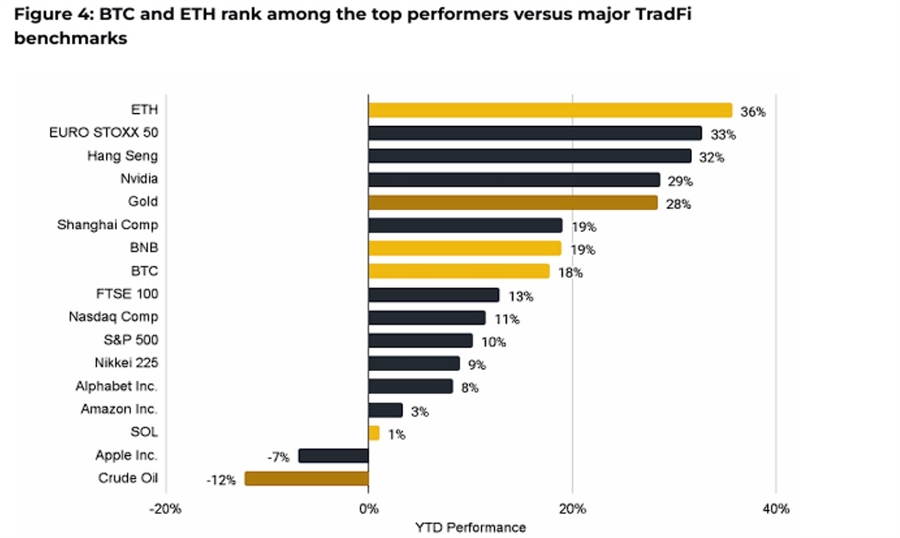
The two biggest assets, Ethereum and Bitcoin, are leading the way with 36% and 18% year-to-date returns, respectively. Both are crushing the S&P 500's 10% performance.
Institutional demand has been a key driver. US spot BTC and ETH ETFs have seen a cumulative net inflow of$54.87 billion and $13.34 billion, respectively, solidifying their role as a primary channel for institutional capital. The dominance of traditional finance giants in this space, with BlackRock alone managing over $58 billion in its spot BTC ETF, underscores how deeply this capital is now embedded.
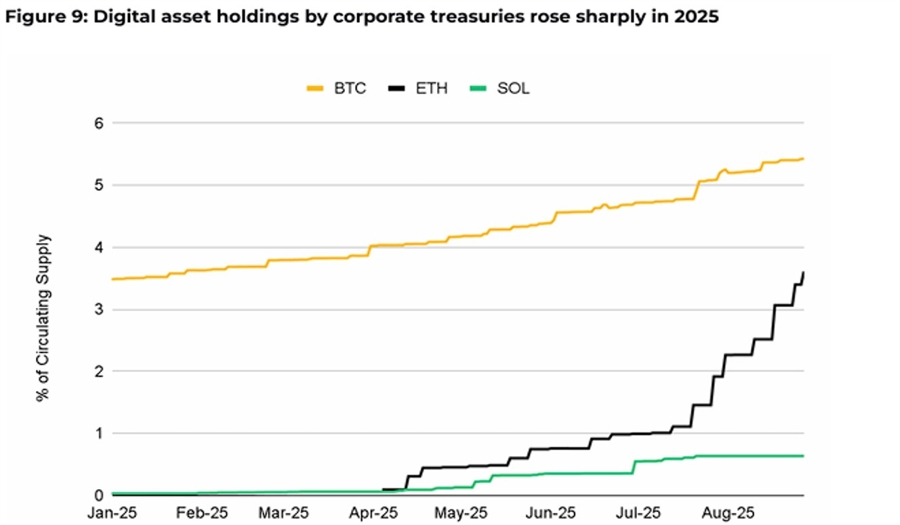
This confidence is also reflected on corporate balance sheets. Public companies now hold 1.07 million BTC, with MicroStrategy accounting for roughly 59% of that total. Corporate Ethereum holdings are growing even faster, having recently surged 88.3% in a single month.
Project Crypto's focus on tokenization could be a game-changer for this sector. The market for tokenized stocks has already hit a ~$349 million market cap, and it's starting to look like the early days of DeFi. By giving these on-chain assets a clear regulatory pathway, the SEC's new framework could unleash a flood of innovation and capital, and finally build a real bridge between Wall Street and the blockchain.

A New Blueprint for American Digital Finance
This new regulatory clarity is coming at exactly the right time. The institutional money is already here, and the market fundamentals are strong. A supportive policy environment could be the final push that takes digital assets truly mainstream.
Project Crypto isn't just about writing new rules for an industry. By creating a framework that rewards builders for innovating in the US, it's a play to make sure the next generation of finance is American-made.
