Structural ias Turns Bearish as Volatility Expands. Key Reaction Levels to Watch for are at $1,525 and $1,455
Ethereum futures have shifted from digestion to expansion, and the structure has weakened meaningfully across multiple timeframes.
After a sharp downside impulse on the 4-hour chart and visible pressure on the daily footprint, the broader weekly structure is now in focus. Volatility has expanded, prior base levels have failed, and sellers are beginning to gain structural control.
Traders and algos will be first looking at the pivot low of 06 Feb, 2026 which is $1748.50. But since the path of least resistance remains to the downside now, we can not rule out higher timeframe potential tests at $1525 and $1455 as possible supports (these are levels to WATCH for price reaction).
Let’s quantify it.
Our Structural Bias Score: -5 (Clear Bearish Pressure)
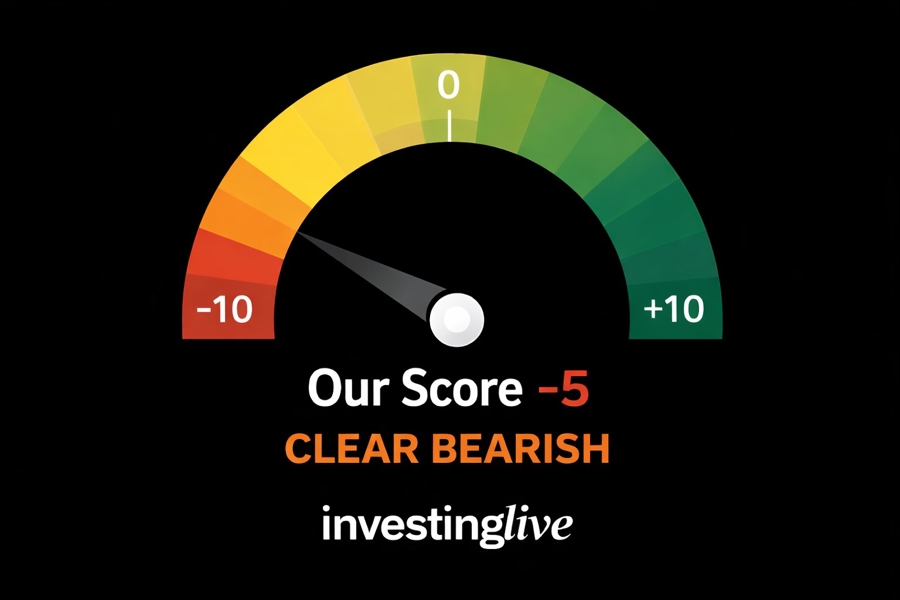
We use a directional scale from -10 to +10 to measure positioning strength:
+7 to +10 → Strong bullish repricing
+4 to +6 → Active bullish bias
0 → Balanced / neutral
-4 to -6 → Clear bearish pressure
-7 to -10 → Structural breakdown
Ethereum now scores -5, reflecting a clear bearish bias with moderate structural confidence.
This is not capitulation territory.
But it is no longer neutral digestion. And today's crypto flush has nothing to do with tariffs.
Bitcoin, naturally, is also showering on traders some liquadations.
The market has tilted decisively toward sellers.
Just because some big investors are buying and market energy is building doesn't guarantee a rally, because Ethereum is still stuck below key price hurdles and needs to actually break through those "walls" to prove the downtrend is over.
What Changed for Ethereum Futures Today: Volatility Has Expanded
After several weeks of compression, the 4-hour chart printed:
A large range expansion candle
Strong negative delta
A close below the lower Bollinger band
Rising ATR (Average True Range)
Educational note:
ATR measures the average size of recent price movements.
When ATR rises, it signals that:
Price swings are expanding
Risk per candle increases
Momentum conditions are replacing rotational conditions
Ethereum has clearly transitioned from quiet compression into active expansion.
Expansion increases the probability of continuation — but only if price gains acceptance below broken levels.
Ethereum Weekly Structure Now Drives the Narrative
On the weekly footprint:
Prior support has failed
Sell-side volume clusters dominate
Value is migrating lower
No confirmed absorption signal yet
The weekly chart reinforces the bearish tilt.
This is no longer a short-term shakeout.
It is a structural test.
Ethereum Price Prediction? Key Downside Reaction Levels: $1,525 and $1,455
Two deeper structural zones now come into focus:
$1,525
A prior high-volume region and potential liquidity pocket.
If price approaches this level, traders should watch closely for:
Delta divergence
Volume spikes without continuation
Strong rejection wicks
Value stabilization
$1,455
A deeper structural support zone.
If reached, this would represent a significant extension and likely attract strong two-sided participation.
Important:
These are reaction zones, not guaranteed bounce levels.
Acceptance below them would imply continued repricing.
What Would Shift the Bias for Ethereum Today?
For the bearish bias to weaken, Ethereum futures would need to:
Reclaim the broken zone above
Show improving 4-hour delta
See volatility begin to contract
Show value migration back upward
Until that happens, sellers maintain structural advantage.
Bottom Line for Ethereum Traders and Investors
Ethereum futures have exited compression and entered expansion.
Our structural bias score now reads -5, indicating clear bearish pressure.
The market is not in panic.
But it is no longer balanced.
If downside expansion continues efficiently, the path toward $1,525 opens.
If volatility spikes and stalls, a reaction could develop.
For now, the burden of proof remains with buyers.
As always, this analysis is for decision support purposes only and not financial advice.