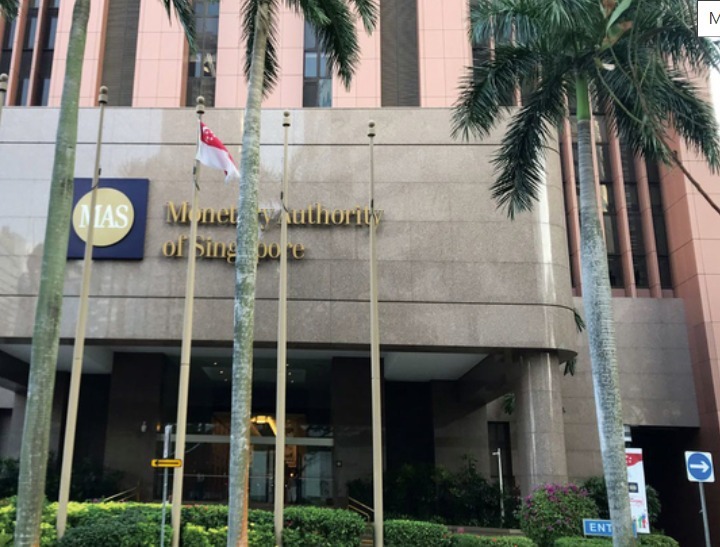
MAS kept policy unchanged, signalling confidence in resilient growth while keeping a close watch on inflation risks in 2026.
Summary:
Singapore’s MAS kept monetary policy unchanged, maintaining the prevailing rate of appreciation for the S$NEER policy band, with no change to its width or centre.
The decision was widely expected and follows MAS keeping the policy band on an appreciating slope in July and October 2025.
MAS said near-term growth should remain resilient, though full-year growth is expected to ease from the strong 2025 outcome.
Inflation forecasts were revised higher, with core and headline CPI now seen averaging 1.0–2.0% in 2026.
MAS said it remains well positioned to respond should risks to medium-term price stability emerge.
The Monetary Authority of Singapore left its monetary policy settings unchanged at its January meeting, maintaining the prevailing rate of appreciation of the Singapore dollar nominal effective exchange rate (S$NEER) policy band, in a decision that was widely anticipated by markets.
MAS said there would be no change to either the width of the policy band or the level at which it is centred, effectively extending the policy stance it last reaffirmed in July and October 2025. Singapore’s central bank operates an exchange rate-based monetary framework, using the S$NEER as its main policy tool rather than interest rates.
In its accompanying statement, MAS struck a cautiously upbeat tone on growth. The central bank said Singapore’s economy should remain resilient in the near term, following a strong performance in 2025. For the year as a whole, however, growth is expected to moderate relative to last year’s pace, with the positive output gap projected to narrow gradually over the course of 2026.
On inflation, MAS revised its forecasts higher. The central bank lifted its projections for both core inflation and CPI-all items inflation in 2026 to a range of 1.0–2.0%, citing ongoing price pressures. Core inflation is expected to rise modestly in the near term before normalising later in the year and averaging within that range.
The updated inflation outlook suggests that while price pressures are no longer accelerating sharply, they remain sufficiently firm to warrant a steady policy stance. MAS said the current configuration of monetary policy is appropriate to ensure medium-term price stability, while retaining flexibility to respond should risks emerge.
Overall, the decision reinforces the view that MAS is comfortable maintaining a modestly restrictive stance amid resilient growth and contained, but still watchful, inflation dynamics. Markets are likely to interpret the statement as signalling policy stability in the near term, with future adjustments dependent on how growth and inflation evolve through the year.